Skip to main content

12 posts tagged with "AI"

View All Tags
Do full IDEs still deserve a seat at the table in the AI era?

Do full IDEs still deserve a seat at the table in the AI era?

· 14 min read
David Sanchez
David Sanchez

A friend of mine canceled his Visual Studio Enterprise subscription in January. He had been using it for years, built multiple production .NET systems in it, and genuinely valued the tooling. But he had spent the last six months doing almost all of his coding inside VS Code with GitHub Copilot Agent Mode, and he could not justify the renewal.

Three weeks later, a background service in production started leaking memory. He tried everything in his VS Code setup: logging, diagnostic analyzers, heap dumps through the CLI. Nothing gave him a clear picture. He reinstated his Enterprise license, opened the Performance Profiler with .NET Object Allocation Tracking, identified the leak in twenty minutes, and fixed it in ten. Then he went back to VS Code for everything else.

That story is the honest version of the IDE question in 2026. Not whether full IDEs are dead, and not whether they remain the default. The real question is sharper: for which roles, which tasks, and which codebases do they still provide capabilities that AI-powered editors cannot replicate? And when you look at the full picture, including what comes bundled with a Visual Studio subscription beyond the IDE itself, the analysis is more nuanced than either side of the debate usually admits.

The focused multitasker: how AI is rewiring the way engineers think

The focused multitasker: how AI is rewiring the way engineers think

· 13 min read
David Sanchez
David Sanchez

Here is a contradiction I keep running into. Every piece of cognitive science research I have read says the same thing: focus on one task at a time. Multitasking is a myth. Your brain cannot do two demanding things simultaneously without paying a steep performance penalty.

And yet, every day I find myself reviewing a pull request that GitHub Copilot cloud agent opened, while a CI/CD pipeline runs on a second branch triggered by AI-generated code. More parallel workstreams than I ever managed before AI entered my workflow and somehow it feels less chaotic than before.

Something does not add up. Either the science is wrong, or what I am doing is not actually multitasking. I think it is the latter, and the distinction matters for every engineer adapting to agentic workflows.

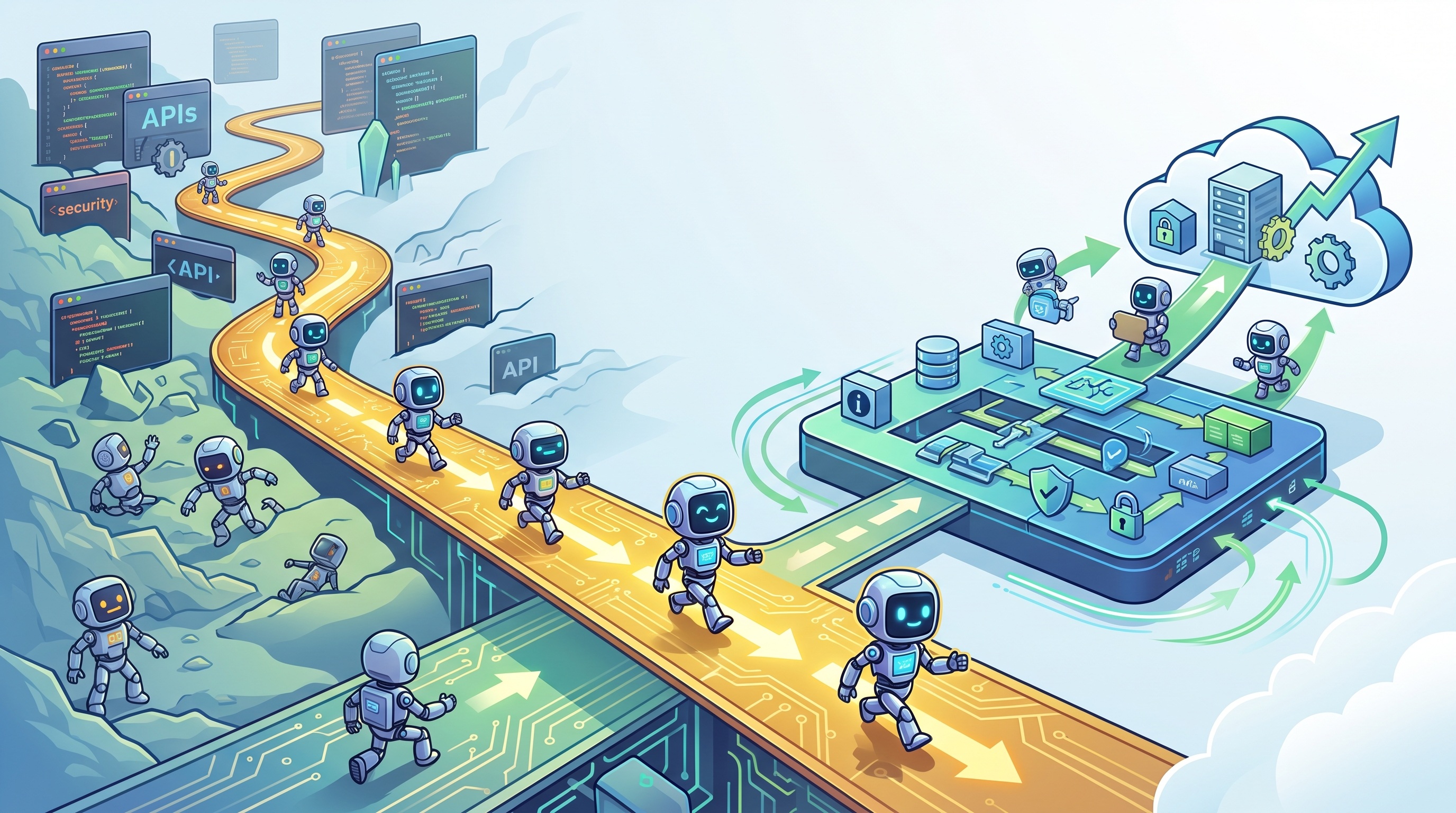
Redefining DevOps: People, Process, Tools, and Agents

Redefining DevOps: People, Process, Tools, and Agents

· 19 min read
David Sanchez
David Sanchez

The Definition Worked. Until a Fourth Participant Showed Up.

DevOps has always been defined by a simple, powerful equation: People + Process + Tools. That formula captured something essential about how modern software gets built and delivered. It broke down walls between development and operations. It gave organizations a mental model for diagnosing what was wrong when things moved too slowly, failed too often, or created too much friction.

For over a decade, this three-pillar model served the industry well. And it did so because it rested on an assumption that nobody questioned: every participant in the software delivery lifecycle was human.

That assumption no longer holds.

CI/CD Pipelines for the Agentic Era: Verification, Security, and Trust at Machine Speed

CI/CD Pipelines for the Agentic Era: Verification, Security, and Trust at Machine Speed

· 16 min read
David Sanchez
David Sanchez

Your Pipeline Was Built for Humans. That's About to Be a Problem.

Not so long ago, every commit in your repository came from a human. A developer wrote code, pushed a branch, opened a pull request, and a reviewer approved it. Your CI/CD pipeline was designed around that flow: run tests, check lint, scan for vulnerabilities, deploy if green.

That assumption is breaking.

Building AI Applications on Azure with GitHub Models: From Playground to Production

Building AI Applications on Azure with GitHub Models: From Playground to Production

· 20 min read
David Sanchez
David Sanchez

The Journey Most Tutorials Skip

Most AI tutorials start with "create an Azure resource" and end with "here's your chat completion." They skip the messy middle — the part where a developer goes from "I wonder which model would work for this" to "this is running in production, monitored, secured, and costing what I expected."

That full journey is what this post is about.

Building Your AI Agent Team: Custom Agents, Spec Kit, APM, and Squad for Scalable Agentic Workflows

Building Your AI Agent Team: Custom Agents, Spec Kit, APM, and Squad for Scalable Agentic Workflows

· 18 min read
David Sanchez
David Sanchez

The Fragmentation Problem Nobody Talks About

AI coding agents are no longer experimental. Teams are using GitHub Copilot, Claude Code, Cursor, and other tools to generate code, open pull requests, review changes, and automate multi-step engineering tasks. The results are impressive, but a quieter problem is growing underneath the productivity gains.

Every developer on the team configures their AI agents differently.

Measuring Developer Productivity in the Age of AI

Measuring Developer Productivity in the Age of AI

· 10 min read
David Sanchez
David Sanchez

When Traditional Metrics Stop Working

AI-assisted development is no longer an experiment. It is part of everyday engineering work across organizations of all sizes. Tools powered by large language models generate code, propose refactors, write tests, summarize pull requests, and coordinate multi-step engineering tasks.

This creates a fascinating and uncomfortable challenge: productivity is clearly improving, but it is becoming much harder to measure accurately.

From Prompts to Specifications: How Great Engineers Communicate with AI

From Prompts to Specifications: How Great Engineers Communicate with AI

· 14 min read
David Sanchez
David Sanchez

How Great Engineers Communicate with AI in the Agentic Era

AI has changed how we write software. But more importantly, it has changed how we communicate intent.

Early conversations about AI-assisted development focused heavily on prompt engineering. Developers experimented with phrasing tricks, formatting styles, and clever instructions to coax better outputs from language models. Entire communities formed around "the perfect prompt."

That phase was useful, but it was never the destination.

Designing Software for an Agent-First World

Designing Software for an Agent-First World

· 13 min read
David Sanchez
David Sanchez

Your Repository Is Now Your Most Important Interface

The role of the software engineer is evolving rapidly, not because AI can generate code, but because software development itself is becoming a human-agent collaborative system.

In recent years, we moved from AI assisting with snippets, to generating entire functions, to proposing pull requests, and now to agents that navigate repositories, reason about architecture, and execute multi-step development tasks autonomously.

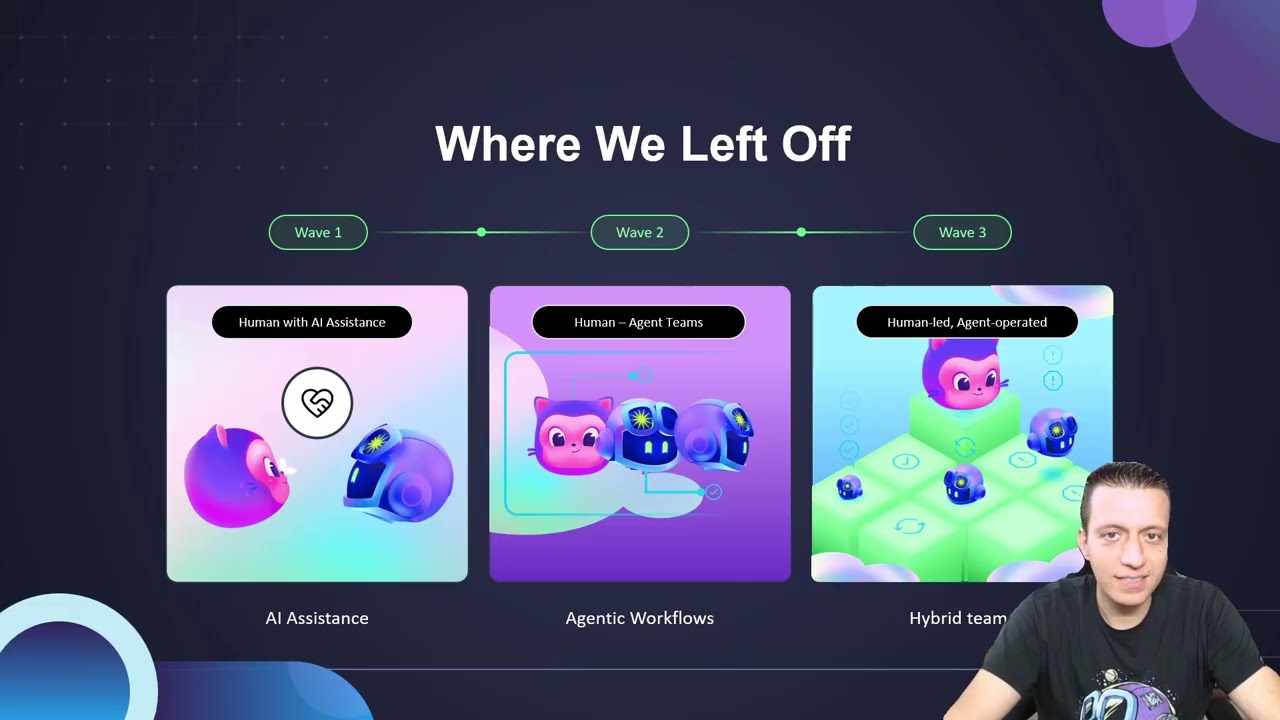
Humans and Agents: Collaboration Patterns from IDE to Pull Request

Humans and Agents: Collaboration Patterns from IDE to Pull Request

· 13 min read
David Sanchez
David Sanchez

The Collaboration Is Already Happening — The Question Is Whether It's Structured

If DevOps foundations prepare the system and the evolution of the Software Engineer reframes the role, the next logical question is this:

How do humans and agents actually collaborate in practice?

Not in theory. Not in demos. Not in marketing videos.

But in real repositories, real IDEs, real pull requests, and real production systems.

Ask me about my website

Powered by Microsoft Foundry

👋 Hello Friend!

You can ask me about:

  • Blog posts or technical articles.
  • Projects and contributions.
  • Gaming: Xbox, PlayStation, Switch, board games, chess, monthly updates.
  • Movies & TV reviews, About me & health journey.