Skip to main content

5 posts tagged with "Engineering Leadership"

View All Tags
Beyond Code: Domain Expertise and Real Impact in the AI Era

Beyond Code: Domain Expertise and Real Impact in the AI Era

· 11 min read
David Sanchez
David Sanchez

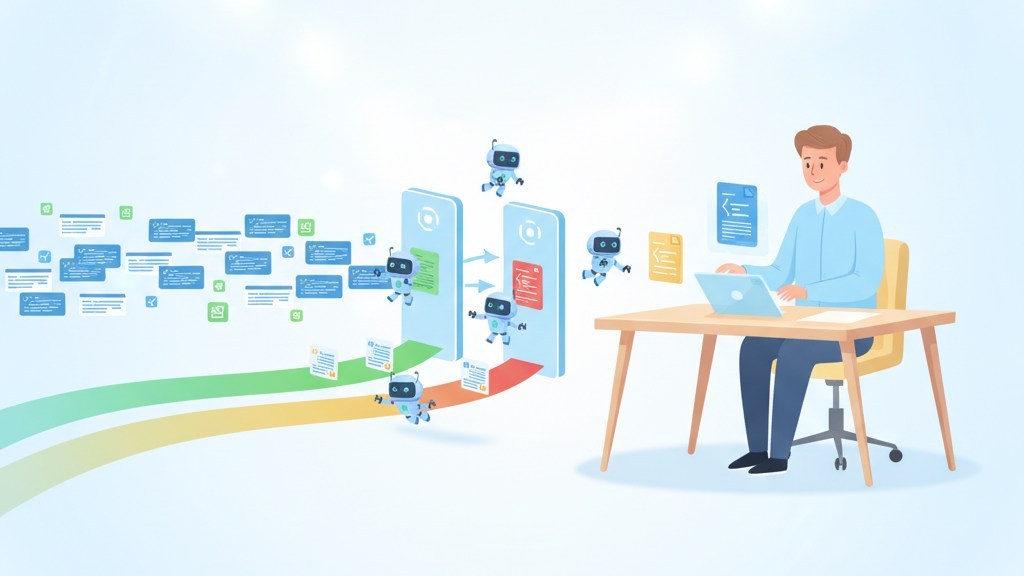
Imagine a finance team waiting for an invoice-dispute workspace: a queue, supporting documents, assignment rules, and a connection to its accounting system. In this illustrative scenario, the feature once consumed weeks of sprint capacity. Now one engineer orchestrates agents that scaffold the implementation, tests, and deployment configuration in hours, using established components and contracts.

That is not an unattended production release. By that afternoon, the engineer and domain owners have reviewed the behavior, validated integration assumptions, and approved and shipped a bounded production pilot. But the change in economics is clear: creating a credible version of a familiar feature requires far less implementation effort. A competitor with similar tools can do the same.

The difficult question is no longer whether someone can produce the queue and its buttons. It is whether the workspace helps people resolve the disputes that keep money, decisions, and customer relationships stuck. When building is no longer the moat, what is?

Own the Verification: A New Execution Mindset for the Agentic Era

Own the Verification: A New Execution Mindset for the Agentic Era

· 15 min read
David Sanchez
David Sanchez

Picture an engineer reviewing an agent-generated pull request. It changes the payment client, retry configuration, tests, and deployment documentation. The engineer learned to work differently: follow the failing request through logs, reproduce the problem, edit each file, and build confidence one deliberate step at a time. Now the proposed solution is already on the screen.

The first reaction is not necessarily excitement or distrust. It might simply be: "That is not how I used to do this task." In this illustrative scene, the discomfort is not about whether the engineer can read the code. It is about the missing experience of having constructed it. A familiar route to understanding has been shortened, but understanding is still required.

That tension reaches well beyond software. When a tool produces work that used to demonstrate our expertise, we have to separate the method from the responsibility. The useful shift is neither "do everything yourself" nor "let the agent handle everything." It is a harder, more durable principle: embrace the leverage, own the verification.

Token Debt: Why FinOps for Agentic AI Is an Engineering Problem, Not a Model Choice

Token Debt: Why FinOps for Agentic AI Is an Engineering Problem, Not a Model Choice

· 18 min read
David Sanchez
David Sanchez

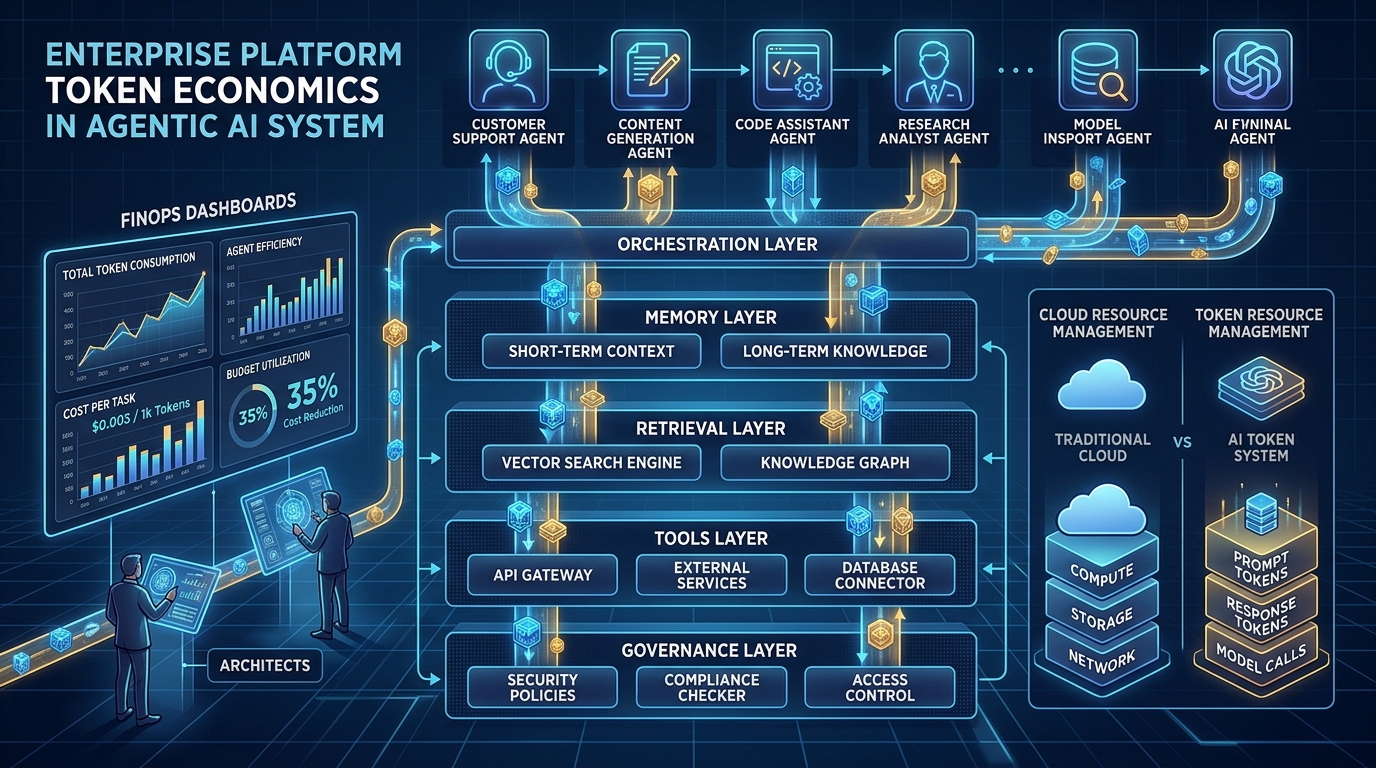
Why the next chapter of FinOps is not about finding a cheaper model. It is about engineering systems that do not waste the tokens they already have.

A finance leader opens the monthly invoice for the company's AI platform and finds a number that does not match any story anyone can tell. Usage grew modestly. The bill grew sharply. Nobody switched to a pricier model. Nobody approved a new integration that anyone remembers. The line item simply grew on its own, the way cloud bills used to grow before anyone built a discipline around watching them.

Ask the engineering team what happened and the answer is rarely a single cause. It is a hundred small decisions: a system prompt that grew every time someone patched in a new rule, a retrieval step that fetches ten documents when two would do, an agent that retries a failing tool call five times before giving up, a workflow that hands a conversation between three specialized agents and resends the full history at every handoff. None of these decisions looked expensive in isolation. Together, they are the bill.

Reviewer Fatigue: When Agents Write More Code Than Humans Can Read

Reviewer Fatigue: When Agents Write More Code Than Humans Can Read

· 15 min read
David Sanchez
David Sanchez

The Bottleneck Moved, and Most Teams Have Not Noticed​

For decades, writing code was the expensive part. Reading it was almost free by comparison. A developer spent hours producing a change, and a reviewer spent minutes confirming it. That ratio shaped everything: our tools, our processes, our sense of who was busy and who was waiting.

Agents inverted that ratio. A capable agent now produces a complete branch with code, tests, and documentation in the time it takes to write a thoughtful task description. Authoring became cheap. Reading did not.

Measuring Developer Productivity in the Age of AI

Measuring Developer Productivity in the Age of AI

· 10 min read
David Sanchez
David Sanchez

When Traditional Metrics Stop Working​

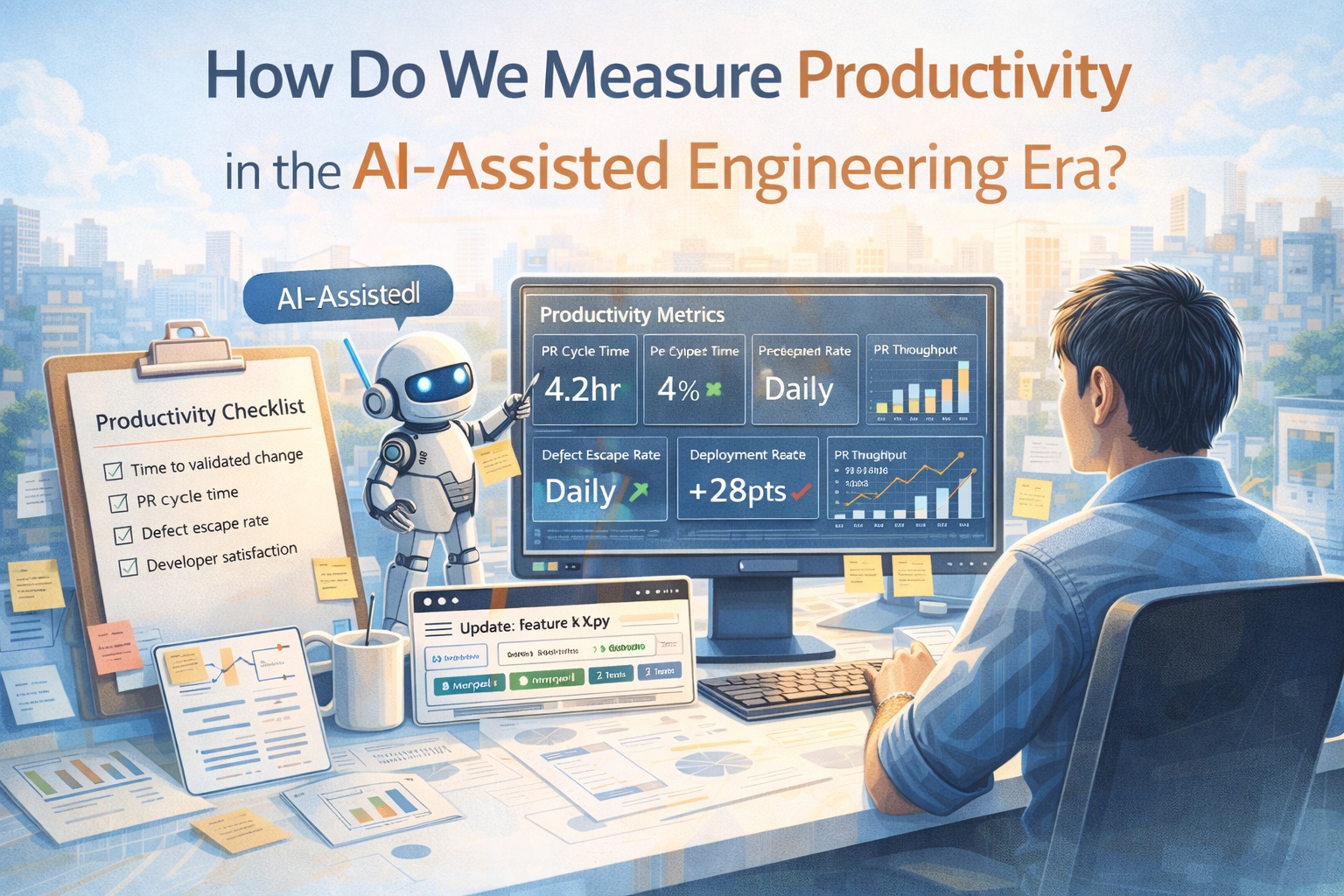
AI-assisted development is no longer an experiment. It is part of everyday engineering work across organizations of all sizes. Tools powered by large language models generate code, propose refactors, write tests, summarize pull requests, and coordinate multi-step engineering tasks.

This creates a fascinating and uncomfortable challenge: productivity is clearly improving, but it is becoming much harder to measure accurately.

📬 Stay Updated

Subscribe to the newsletter and receive the latest blog posts, projects, and content updates.

We respect your privacy. Unsubscribe anytime. Privacy Policy

Ask me about my website

Powered by Microsoft Foundry

👋 Hello Friend!

You can ask me about:

  • Blog posts or technical articles.
  • Projects and contributions.
  • Gaming: Xbox, PlayStation, Switch, board games, chess, monthly updates.
  • Movies & TV reviews, About me & health journey.